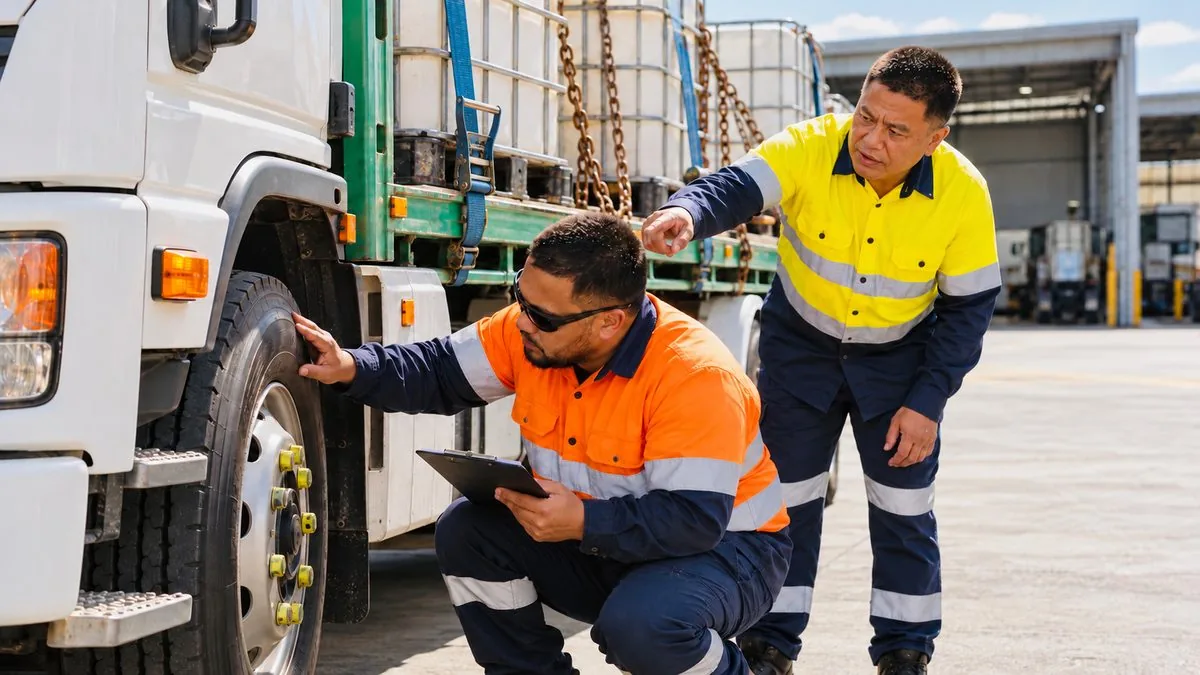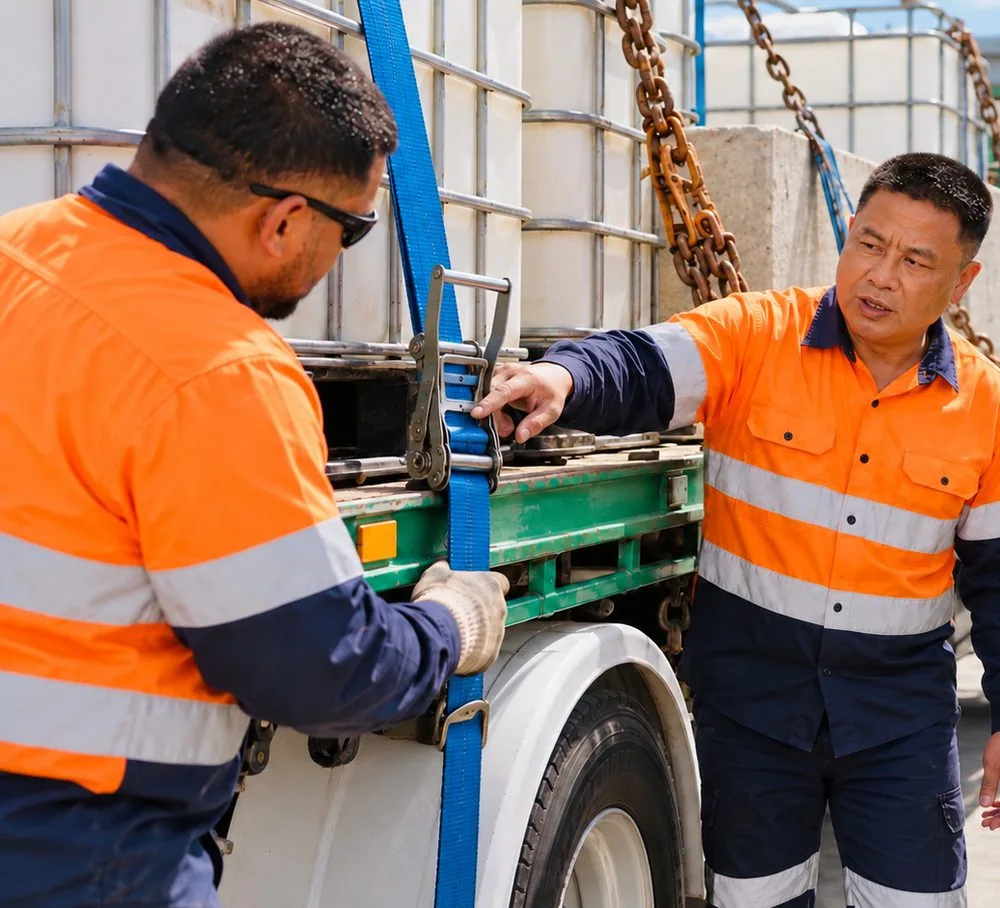
A load that shifts can roll a truck, spill across a motorway, or crush someone. Load restraint isn't optional. It's one of the most important skills you'll learn.
The official guide
Australia has a national Load Restraint Guide from the National Transport Commission. It's one of the three documents Transport for NSW says you need for your knowledge test, so you'll be studying it anyway.
The physics in one sentence
When you brake, your load wants to keep going forward. When you turn, it wants to keep going straight. Your restraint system has to hold it against those forces, especially forwards, where braking forces are strongest.
Core principles
- Restrain forwards, backwards and sideways. Not just down.
- Use enough straps or chains for the weight and type of load.
- Check your equipment. Frayed straps and damaged chains get replaced, not "made do".
- Load evenly and keep the weight low where you can.
- Re-check after you start driving. Loads settle and straps loosen.
It's your responsibility
As the driver, you share responsibility for the load being safe, even if someone else loaded it. If something looks wrong, don't drive until it's fixed.
Ready to get your truck licence?
Talk to Tommy: 25+ years teaching, 3,000+ drivers trained.
General information only. Rules and fees change, so always check official Transport for NSW and Service NSW sources before you book.